
Mains
Time-Tested
Steak au Poivre (A French Bistro Night at Home)
Pepper-crusted tenderloin, a cognac flambé and a rich cream sauce made in the same pan. A French bistro dinner for two you can make at home.
JUMP TO RECIPE
Prep
10 min
Cook
15 min
Serves
2
Level
Medium
Ingredients
1 boneless beef tenderloin (about 1 pound), cut into 2 thick medallions
2 teaspoons cracked black peppercorns
1 tablespoon unsalted butter
2 tablespoons cognac
¼ cup beef stock
¼ cup heavy cream
Salt, to taste
The first time you pour cognac into a hot pan and light it, you understand why people make this dish. Steak au Poivre is pepper-crusted tenderloin, a cognac cream sauce, and flames in your kitchen on a Tuesday night. Chad loves a great steak. I love a great sauce. This is both, and it’s exactly the kind of dinner you make when it’s cold outside, there’s snow on the ground, and you want the night to feel like something.
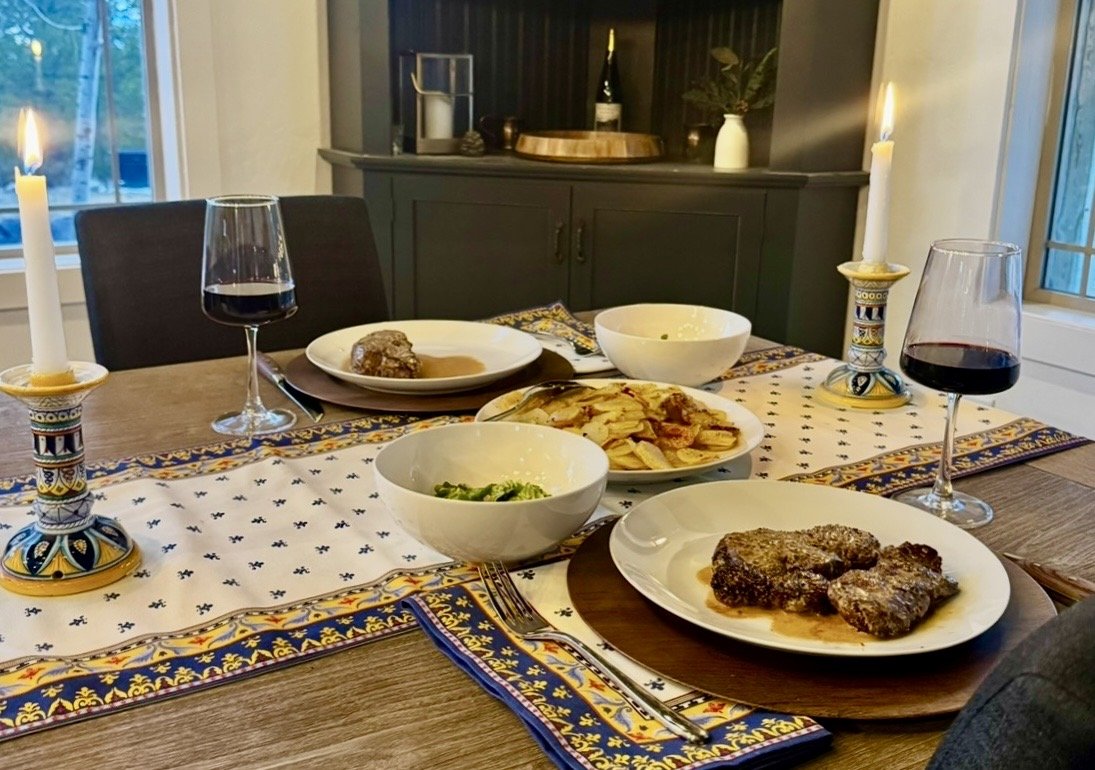
We made it on a night that called for exactly that: candles on the table, a bottle of red already open, spring snow outside and a fire in the fireplace. The house was warm and quiet, the kind of night you don’t want to rush.
The Menu
Steak au Poivre (recipe below)
Pommes Anna, cooked through beautifully and completely phenomenal, especially broken up with the au poivre sauce pooling around everything
Simple Green Salad
A good bottle of red
About the Flambé
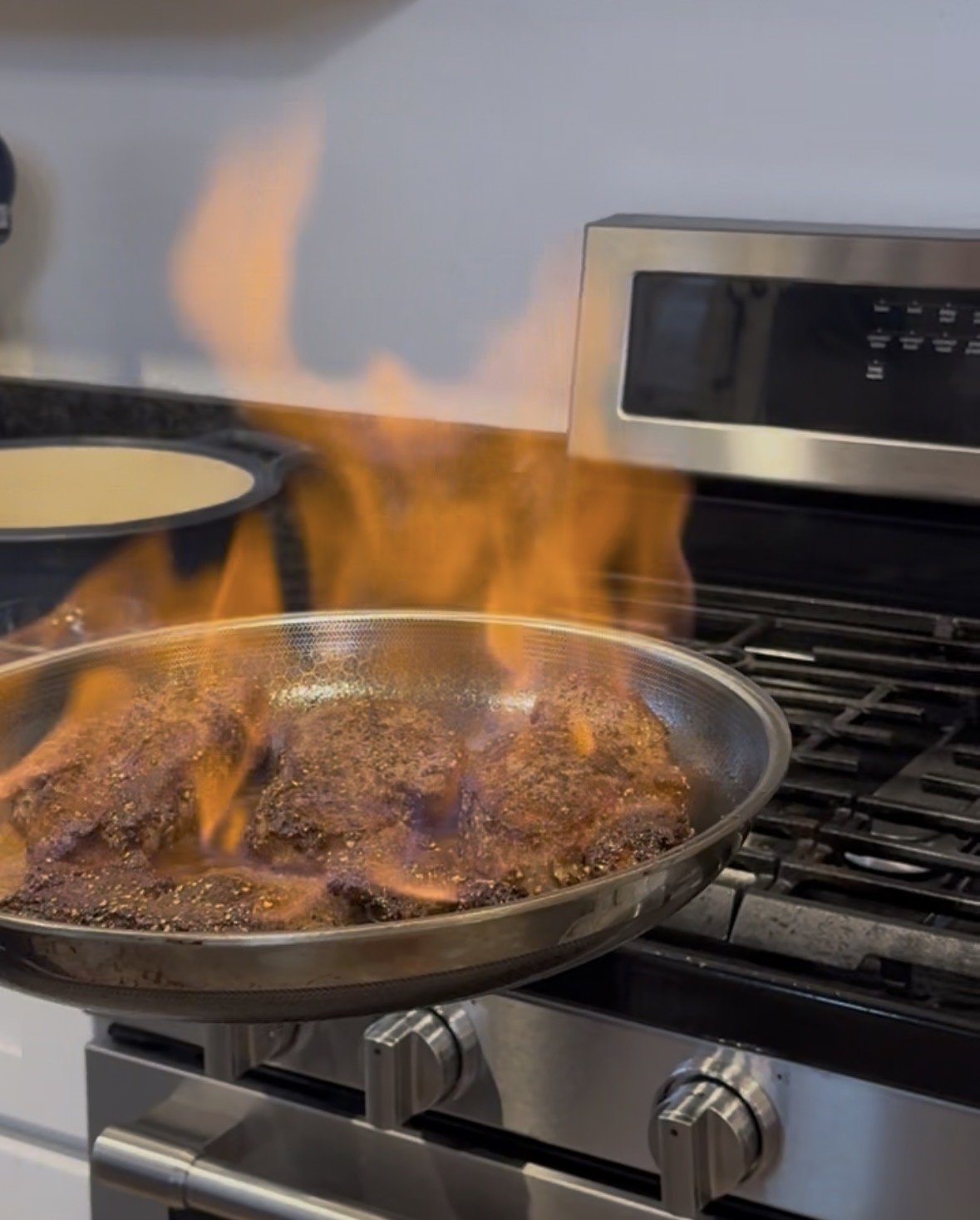
The flambé is what makes this recipe feel like dinner and a show. You pour the cognac into the hot pan and light it, and the flames go up. It’s a little exciting, a little nerve-wracking, and completely worth it. Chad is more confident with that moment than I am, so I step back and give him the pan.
It was just the two of us that night, so the audience was small. The moment still felt like something.
About the Recipe
The original recipe calls for a mix of green and black peppercorns. We use only black. Green peppercorns in brine can be hard to find, and we prefer the flavor this way. Either works.
The cognac cream sauce comes together in minutes in the same pan the steaks cooked in. It’s rich and peppery and exactly what you want spooned over everything on the plate.
Method
Using the side of a heavy pan or a meat mallet, flatten the medallions slightly.
Sprinkle the cracked black pepper on a plate and press both sides of each steak firmly into it to coat.
Melt the butter in a heavy skillet over medium-high heat. Sear the steaks 2–3 minutes per side, until browned on the outside but still red and juicy inside. Remove to a plate and tent loosely with foil to keep warm.
Pour off any excess fat from the pan. Remove the pan from the heat and carefully pour in the cognac. Using a long lighter, carefully ignite it and let the flames burn off completely on their own, about 30 seconds.
Return the pan to medium-high heat. Add the beef stock and cream and cook, stirring, until the sauce thickens slightly, about 2–3 minutes. Season with salt and taste.
Spoon the sauce generously over the steaks and serve immediately.

A note
Set the table before you start cooking. Light the candles. Pour the wine. Serve the steak with the sauce spooned generously over the top, the Pommes Anna alongside, and the salad in a bowl at the table to pass. This is the kind of dinner you sit with for a while.
Good to know
More About This Recipe
Nutrition
Calories
630
Protein
47g
Carbs
2g
Fat
46g
Tips & tricks
Measure your cognac before you start, keep a lid nearby just in case, and remove the pan from the heat before you add it. The flames are real and they go up fast.
Nutrition is an estimate per serving, calculated from the ingredients.
Substitutions
Storage & leftovers
Questions people ask


Postcards from my kitchen
Made this one?
Tell me how it went, or what you did differently. The best changes to these recipes have come from readers.